Educated, Unemployed, Frustrated, but Looking on the Brightside

We're more than fodder for a cartoon. We're young adults stuttering at the start of our lives, but we have a voice.

I don’t know who Matthew C. Klein is, but I like him. I like Matthew because he wrote an Op-Ed piece entitled “Educated, Unemployed, and Frustrated” for the New York Times on March 21st, and in doing so, is one of the few of us early 20-somethings attempting to tell the world how we feel. We’ve been mocked on the cover of The New Yorker, labeled boomerang kids by those who need catch phrases, and attacked in the New York Times Magazine. But we’re not just fodder for a cartoon. We’re young adults stalemated, stuttering in our attempt to get going. But we have a voice.

“The millions of young people who cannot get jobs or who take work that does not require a college education are in danger of losing their faith in the future…Even if the job market becomes as robust as it was in 2007… my generation will have lost years of career-building experience.”

Right On, Matthew, right on.

Us educated 20-somethings trying to find work in saturated job markets, where entry level positions are going to applicants technically at a “mid-career” stage, are living in a constant state of uncertainty. It’s a Catch-22. The process is frustrating, and we’re forced to be victims — you can’t say to a potential employer, who may take weeks to get back to you, “Please, Sir/Madam, could you make your decision on me a little faster — I’d like to get my life together now.”

There are many times over the last few months when I wanted to bash my head against a wall — like when I learned an email I sent to an old boss about a job opening at her museum went into her spam folder. She liked me for the position, and would have gone to bat for me, but didn’t get my email until after the position had been filled with another applicant. Lesson learned? Pick up the phone.

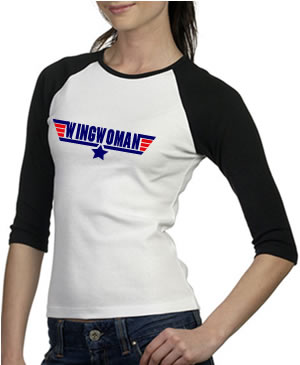
Someone told me landing that first job is all about luck. And while luck hasn’t necessarily been on my side, I’ve managed to stay cheery. Remember, if all else fails, there’s always my back-up career as a wingwoman.

It's been 3 weeks since I've heard on those 3 interviews, there must be an outbreak of wastepaper basket fires

I try to be practical. Interviewers do have jobs after all, and they have work to do: “There was just an opening in their gallery — I’m sure they’re busy.”

Then another week passes. No one has said “No” yet, so I’m still inclined to give the company the benefit of the doubt:

“There must have been a fire in the building and they’re not allowed back into their offices this week.”

Yea, that explains it. I’ve only heard back on a handful of  job applications because of an unannounced outbreak of wastepaper basket fires raging across the tri-state area. And apparently, Mercury just entered retrograde.

Okay, it’s not me or my resume — it’s Mercury and office fires. I feel better now.

Rewriting “Life’s Little Instruction Book” from the Cusp of a Quarter Life Crisis

In the 8th grade, "Life's Little Instruction Book" was required reading. our teachers felt learning secularized parables would be more beneficial for our intellectual growth

Rather than learn the art of well-crafted sentences through a standard curriculum of books like The Jungle Book, the English department of my sleepy suburban school handed out copies of Life’s Little Instruction Book and Chicken Soup for the Soul to my 8th grade class. The thought must have been that learning secularized parables would be more beneficial for our intellectual growth.

Eventually, we were charged with the assignment of creating our own Life’s Little Instruction Book. We knew nothing of the real world and yet we were going to act as authorities on “how to live a happy and rewarding life.”

I recently found my flamboyantly illustrated attempt and was amused. “Don’t worry if you’re not the prettiest rose. We’re all beautiful in our own light” — my teacher found this little stroke of transcendental wisdom endearing. If I had to rewrite my 8th grade book of advice today, I might include that same instruction, though perhaps rewritten with less sentimentality, and add a few other insights I’ve picked up in the 13 years I’ve traveled since…

Invest in at least 1 Ina Garten cookbook. The orange scones in this one are an ace.

1. Invest in at least one Ina Garten cookbook

2. (Re)read Strunk & White’s “The Elements of Style”

3. Learn how to make your favorite cocktail

4. Plant an herb garden

5. Always have a go-to outfit

6. When you’re a broke grad student, never refuse his offer to pay for dinner

7. Become a member of at least one museum and visit often.

8. Keep in touch with your old study groups

9. Get a good tailor

10. Get lost in Italy

11. Have a pet

12. Don’t forget to thank you parents

Find your red lipstick and wear it often. Mine is Laura Mercier's Sexy Lips

13. Find a shade of red lipstick that suits you and wear it often

14. Print calling cards and never leave home without them

15. Learn all the words to “American Pie”

16. Drink lots of green tea

17. Buy a really good yoga mat

18. Write postcards when on vacation and send one to yourself

19. Print out your digital photos

20. Start a blog… and don’t look back.

Happiness is a warm puppy who loves you.

Boys Don’t Have Cooties

In kindergarten, I didn’t know what a cootie was, but I never thought boys had them. As far as I could tell, a cootie was just an excuse for girls to avoid boys on the playground. This made no sense to me. Boys played better games at recess – tag, dodge ball, hide and go seek. Girls played pat-a-cake. I was terrible at pat-a-cake, but I had a mean peg for dodge ball.

I always thought girls who said "boys have cooties" were ridiculous. Boys didn't have cooties. They had penises.

“Eeeeew, no! Go away!” Lauren squealed when Michael Cagliatella asked if he could push us on the tire swing. “Boys have cooooooooties.”

I shot her an evil eye. Michael Cagliatella didn’t pull my pigtails like the other boys in class and he once offered to share his chocolate milk with me at snack time. Michael Cagliatella was different and I was smitten. The way I saw it, Lauren and her cootie problem were getting in the way of my childhood romance.

“Boys don’t have cooties,” I replied indignantly as I watched my first love skulk off to jungle gym. “Boys have penises.”

Lauren’s ears perked up. “What’s a pensises?”

The truth was I didn’t really know what a penis was or what boys did with them, but I’d been such a know-it-all — I had better follow through.

“They’re kinda like toys and fun to play with. You’re no fun.” I got off the swing and joined Michael on the monkey bars.

I can only imagine the dinner table conversation at Lauren’s house that night: “Kathleen and I had a fight. She said I was boring and that she rather play with Michael’s penis.” Lauren wasn’t allowed to have playdates at my house any more. I could tell by the sideways stares that her mother and father had painted me as a five-year old harlot that their daughter was to have nothing to do with.

Michael liked it when I was the nurse to his doctor, but I made sure he agreed to change it up -- I mean, sometimes, I liked to be in charge.

The scarlet letter didn’t really bother me because Michael became my “boyfriend.” Our favorite games were doctor-nurse play-acting. Michael liked to dress-up as a doctor and I would be his nurse. He even gave me a white hat with a red cross to wear when I came over. Michael would call the shots as we performed emergency surgery on his favorite teddy bear with the arm that fell off at least once a week.

“What should I do, Doctor? I can’t stop the bleeding?”

“Pass me the masking tape! Stat!”

“Oh, Doctor! You’re so clever!”

“Now the paper towel and the string!”

“Doctor! You saved Mr. Fuzzywuzzy’s arm. My hero!”

Even though this was Michael’s favorite scenario, I made him agree to change things up every so often – I mean, sometimes, I liked to be in charge.

Our role play abruptly ended that summer when Michael’s parents moved the family to California.  I can’t say I was heartbroken. I acknowledged that I was only 5 and that there would be plenty more boys who’d want to play doctor to my nurse in the future.

Every so often, I think about Michael Cagliatella. Does he still have those trouble-maker’s eyes? Does he still wear those striped shirts and a middle part in his hair? What would happen if we had a playdate today? Would his parents finally let me sleep over? And if they did, would he still like to see me in my nurse’s hat?

Things Facebook Tells Me That I’d Rather Not Hear

Facebook reminds me I was nearly 20 lbs heavier in college -- note the size of my arm in exhibit 1 on the left vs. the more recently taken exhibit 2 on the right

My Facebook newsfeed and I have a tenuous relationship. When it alerts me to a friend’s favorite story in today’s New York Times or lets me know they safely escaped the tsunamis in Hawaii, I like my newsfeed. But just as often, facebook tells me things I’d rather not hear…

1. I was 15 pounds heavier in college, and looked it.

There are only 429 photos of me on facebook, and thankfully very few from my early college days, but the ones that are there…well, forget “freshman 15,” more like “freshman kiloton.” Blame one too many sports-related injuries and one too many late-night frozen yogurt study breaks. To de-tag or not to de-tag?

2. 4 people I went to high school with are already married.

It’s not like getting married is any measure of success or that I’m still competitive with people I haven’t spoken to in 7 years or anything…

3. The guy I’m in love with is “now in a relationship”…with a girl who isn’t me.

I probably should have de-friended him when we decided to go our separate ways, but then I would have lost stalking privileges. Seeing this on my newsfeed made me throw up a little… and then sign-up for OkCupid.

4. Those twats whose papers I used to edit are in PhD programs and on fellowship.

My teenage cousin has a more active sex life than I do.

When I was an MA student, I tutored a number of underclassmen in art history and edited their grad school applications. They couldn’t tell the difference between a brick and an original idea if their lives depended on it. Their status updates announced they had been accepted into prestigious PhD programs… the same programs that rejected me. Ironic, no?

5. My teenage cousin has a more active sex life than I do.

Every month, she has a new boyfriend. Every day she posts a new album of webcam photos featuring her making out with her latest beau. Maybe if I were a better older cousin, I’d try to reign her in, teach her about modesty, but more often I feel like asking her, “so, what’s your secret?”

My Father Always Told Me to Keep My Alternative Job Skills Honed

Our resumes get lost at sea, our cover letters messages in a digital human resouces bottle.

I’ve come to accept that the job hunt is a long and arduous process. Sometimes, you’re lucky to have a  family member or fairy godmother who can make a call and throw a little pixie dust into the air so that in the morning you wake up with a job, a book deal and a pony.

Most of us lack pixie dust. Instead, we rely on resilience, patience and padded resumes.

In one day,  I churned out 5 cover letters requesting to be considered for recent postings in a variety of fields:

  • Auction House Junior Specialist
  • Gallery Coordinator
  • Culture blogger for an online edition of a magazine
  • Documentary film researcher
  • Professional Wingwoman

The Professional Wingwoman was my father’s idea.

He has lots of ideas about what I could be doing for work: running a gourmet hot dog shop in our home town, hosting a “fresh baked farm bread” stand in upstate New York, working as a barista in my own NYC cafe. Very few of his suggestions are practical or have to do with art history, though he’ll argue a cafe is a great place to hang paintings.

I've had years of experience in the job. I'd be a natural professional wingwoman

The wingwoman option struck him while he was watching Rachel Ray (!?!). The founder of wingwomen.com, a dating service for men who lack game — the only thing they can pick up at a bar is their own tab, and only if it’s very short — was a guest. My father thought it was a natural fit given that my college years were spent mostly in the company of sporty guys with ivy-league degrees and monosyllabic names. Indeed, I had 4+ years of wingwoman training.

Figuring it was better to have more lines in the sea, I took my father’s suggestion and went fishing again. I updated my CV, uploaded a photo and submitted an application.

I’ve only just started to receive interview requests on job applications that went out in November. Who knows if I’ll hear back from wingwomen.com. But maybe, just maybe, in May instead of “art historian,” I’ll have a new career teaching another art form — the art of the pick-up.

“The Social Network” is a Terrible Movie, but We Say we Love it Anyway

All these critics agree -- The Social Network is a landmark film. Maybe I watched the wrong movie.

News Feed: “Facebook is now in a complicated relationship with The Social Network.”

I may be the last person on the planet who, before this weekend, had not seen “The Social Network.” Now that I’ve caught up, I wish I was still the last person on the planet who hadn’t seen “The Social Network.”

My opinion of the movie has little to do with the fact that I was friends with Mark Zuckerberg in public school. We weren’t extremely close, but I knew him well enough that my mother was willing to make him the sole exception to the “No Dating Until You’re 18” rule (oh! Mothers and their power of foresight!). “The Social Network” is not a bad movie because it’s an inaccurate portrayal of one of the most enigmatic (and powerful) characters of our generation. It’s a bad movie because it’s superficial, boring, and disjointed.

Our obsession with Facebook and its creator is a complicated one that dictates the way we respond to “The Social Network.” Until recently, Zuckerberg stayed out of the spotlight. When we did see him interviewed, he was reticent, brilliant but hard to relate to. The lawsuits attacking possible underhanded dealings threatened to take Facebook from us. We knew there were a few of them, but what were they about? And yet, while there were those who tried to halt its forward march, “to Facebook” became an action we can’t live without.

We’re inclined to like “The Social Network” because as Facebook rapidly penetrated every click and every interaction, we craved a  neat summary of how this idea born in a Harvard dorm room transformed into a global phenomenon — a phenomenon that has irrevocably changed the way people connect.

In a world where getting their first determines "coolness," The Social Network is only cool because it told the facebook story first.

We live in a world where getting there first is the principal criteria for “coolness,” the leading criteria for critical acclaim. The iPod will always trump other mp3 players because it got there first. “The Social Network” will always trump future Facebook or Mark Zuckerberg movies because it was the first to tell us the Facebook story. Stephen Holden of the NYTimes calls it “a once-in-a-generation movie,” and it is, simply because the next Facebook movie is another decade in the making.

Facebook is an empowering platform that  allows us to not only communicate, but to curate our lives.  It enables us to pick and choose and update the details that shape the way we’re perceived by our peers. We have become objects in an online museum where our solo-exhibits change as frequently as we choose. Even if Facebook one day implodes, an unlikely event now that it’s so ingrained in our social and digital fabric, we will never revert to the old ways of locating, messaging, and digitally relating to people.

That’s the true Oscar-caliber performance of Mark Zuckerberg’s social network. Sorkin’s and Fincher’s snooze fest pales in comparison.