
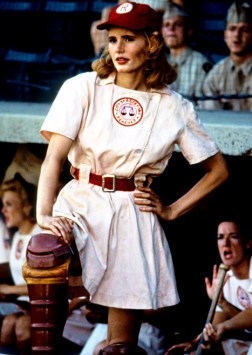
 In my hometown, girls who wanted to play in Little League played on co-ed baseball teams until the 5th grade. Despite being the generation that watched “A League of Their Own” in the theaters, there weren’t many of us who wanted to be Dottie Hinson (played by Geena Davis). We were evenly distributed across all the teams, and that meant that most of the time there were no more than two of us. I wanted to pitch, but a coach told me: “Girls don’t pitch.” But I had a good arm, so I was put in right field (well, that was the justification for it, anyway.) Girl 2 on the team was also put in the outfield… a fake position called “center right.”
Often at practice, Girl 2 and I would out-slug the guys. But when it came to setting up the order, we were always placed at the bottom. Come game time, when we’d get up to bat we were heckled by the boys on both teams — by our teammates and by the opponents. The male coaches never did anything to make the boys shut up. If I struck out, which I did a lot (and no more than the boys), I’d be met back in the dugout with “what do you expect from a girl!?”
When I was finally old enough to join the all-girls softball league, everything changed. I became a starting pitching, a top-of-the-order batter, an All-Star. When we’d play co-ed softball in gym-class, I was a first round draft because I could out-everything the boys.
There was no more heckling. There was just the game.
 I remember being in pre-school and wanting to be a boy. I’d try to pee standing up (I learned after one attempt that we’re just not built for that.) I guess it’s a phase all children go through — that phase when they’re trying to understand what makes us different from the other kids on the playground, and then trying to appropriate some of those differences… because the grass is always greener on the other side.
Maybe that’s why I preferred a hammer, nails, and a block of wood to dolls when it came to toys. My school folders had cars on them instead of “My Little Pony.” As I got older and moved into sports, I always played with the boys. I’d swim in the boys’ lanes, or go to their practices in girls’ off season. I fight the boys in karate and bout with the boys at fencing practice. In college, I majored in Economics. I did my problem sets with the boys and go for morning runs with the boys.
And then I’d throw on a pair of high heels, a bedazzled shirt and some eyeliner and drink beers with the boys. The boys would often still be in their gym clothes.
The battle of the genders begins from day one. There’s only a short, sweet time when the playing field is level and then the realizations kick in – boys and girls are not the same.
We fall from Eden.
Putting aside basic biology, what is it that makes men and women so different? To me, it’s all about experience. We fall from Eden not because we realize our nakedness, we realize we don’t have access to the same opportunities. The boys on my little league team were never told they couldn’t pitch because they were boys. As we think of what makes us strong as women, so much of what empowers us is how we learn to define ourselves in relation to the boys — even if we don’t want to admit it. What if my little league team had been 50-50 boys and girls? What if my coach had had daughters instead of sons? Would I still have been told “girls can’t?” Would someone have said “boys can’t?”


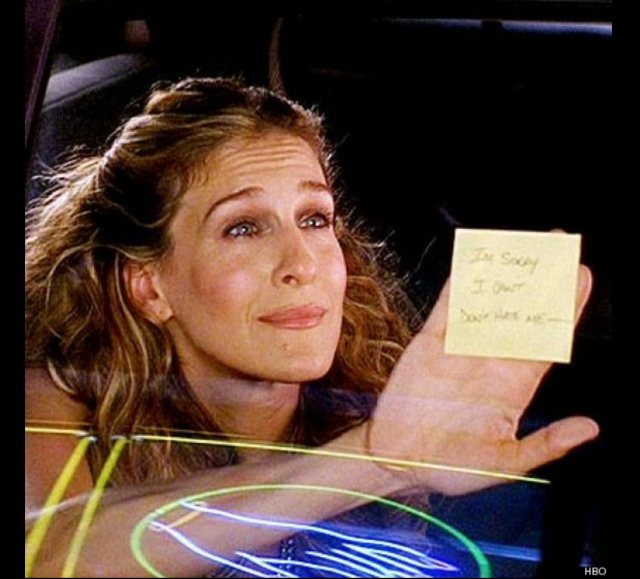

 The changing calendar triggers a flurry of contradictory feelings. Nostalgia — for the year closing and years past. Excitement — the chance to start afresh and the promise of new adventure. Fear — a lot of life happens in a short period of time; can I handle what lays ahead?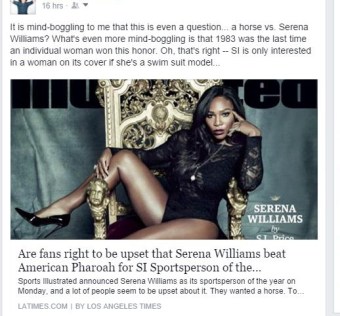
 It’s true there are more male professional sports than female professional sports, and of the 23 million who read SI, 18 million are men… so we can give the editorial board a bit of leeway… the split doesn’t have to be 50-50, men to women recipients. But let’s remember, women have been able to compete in the Olympics since 1900, and as of the 2012 London Games, represent more than 44% of the field. 191,131 women compete on NCAA teams (43% of all NCAA athletes.) If we need a model and are using the Olympics, the highest level of competition for any athlete, then 13% is just too low…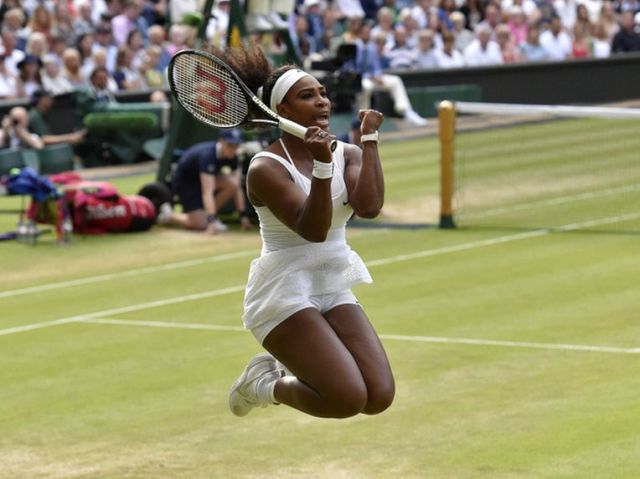


 Flash forward 20 years later, and I’m writing a grant proposal to the National Endowment for the Arts, requesting funds to support an exhibition about female identity. The whole exhibition is held together by one large central piece, “
 They Told Me to Find a Rich Husband