A Boy’s Weekend in Bulgaria

When it comes to bars, I have one simple rule: if its featured drinks are rainbow colored-shot flights, find another bar.

I'd come looking for a drink. I found rainbow shots...
I’d come looking for a drink. I found rainbow shots…

Sitting in the hookah-scented Graffiti Cafe, I saw a list of drinks I hadn’t seen since that college spring break on Playa del Carmen. I folded the menu and walked into a hotel lobby, scanned the scene and wandered into a restaurant. I ordered a bowl of cucumber-yogurt soup and a glass of rakia and made some notes.

I’m in Bulgaria.

Varna, Bulgaria, to be exact — a city perched on the Black Sea with a history older (and more complicated) than any other in the world.

No, seriously. It’s mad old.

Varna is know for it's spot on the Black Sea, and its 4km-long beach party
Varna is know for it’s spot on the Black Sea, and its 4km-long beach party

But that’s not the point — my interest, for the purpose of this post is in Varna today. Namely, in Varna as the party city of the Black Sea. Where dance clubs and open-air bars stretch for 4 kilometers across the beach, creeping up to the water’s very edge. It’s a city you go to to misbehave — a summer long spring break town where the drinks come in fanciful (unnatural) colors and the music blasts from every door opening (you never really know what euro-pop techno tune is playing in your club; it could just as easily be coming from next door.)

My first morning in Varna started lazily — I rolled out of bed at 9:15 and stumbled to get dressed, still “hungover” from the 2 days of travel it took me to get here. By the time I had my shoelaces properly (and safely) secured, I had 20 minutes left to grab my free Bulgarian breakfast.
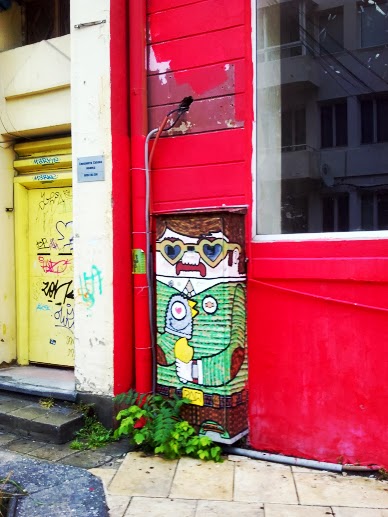
Varna is a colorful city, to be sure

I scurried down the hall, trying to ignore the South African-sounding man standing in nothing but his skivvies seeking direction on how to work his TV remote from the poor receptionist who had obviously accepted his demand for help unaware of what was awaiting him.

The hotel, an art nouveau gem, was reportedly full the night before, but joining us for yogurt and coffee were only a group of 50-something-ish British gents. Mr. Boxer Briefs joined them a few moments later.

“They’re Americans,” I heard one of them say, when they noticed I was laughing at their request for “brown bread” (meaning properly-toasted white toast).

“Yes, we are. I’m sorry.”

I learned the group of 10 burly British gents were on a weekend-long holiday. A sort of “let’s pick somewhere in the world to go and go” adventure.

They had go-karting in their future. I suggested the archaeological museum.

The exchange was short. I immediately began to fill in the missing pieces and write the screenplay…

I imagine it to be a sort of Hangover, Britainized, with a cast that includs Colin Firth, Hugh Grant and Ciarán Hinds (expected, I know, but easy sell).  They come to Varna hoping for a taste of the Orient and the semi debauched, only to find they’ve hit it at the start of the off-season.  Very few people understand any English. The only open bar on the beach is an underground gay dance club. The city that doesn’t have a wet season is all of a sudden hit with a weekend long monsoon. They go go-karting and discover the go-karts are decommissioned Cold War era military vehicles you push.

Hilarity ensues. They rediscover themselves. etc.

In short, it’s kinda like a Hangover meets Saw, but without the blood and sudden toddler cast member.

Obviously, I still need to flush this whole thing out, but if there’s one thing I have figured out it’s that Varna is a perfect backdrop for a Hugh Grant movie. Trust me. I’ll see you at the Golden Globes…

The rooftops of Varna as the monsoon approaches...
The rooftops of Varna as the monsoon approaches…

The Life of the Young and Fabulous? Or, #KeepingUpAppearances?

IMG_20130518_120819“Promise me, Joe: when I get married, you’ll do my wedding.”

One of the great advantages to my job is that I have a roladex full of caterers, event photographers, and florists. When weddings happen, I’m your go-to gal for the essentials. When my turn comes, I won’t need a planner. I’ll just call a few friends and ask them to show up with their talents. Joe is a florist. A fantastic florist — the kind that takes you into Wonderland and deposits you among fanciful, gorgeous flowers.

“Of course! But don’t hurry to get married too fast. If your facebook is anything to go by, you’re pretty busy being fabulous and not married.”

It’s (mostly) true.

Artful adventures are just  another day in the life
Artful adventures are just another day in the life

If you follow my (arguably) overactive (and private) instagram account, you’d say I was living the life. Roof-top, top-shelf cocktails. Midweek museum outings. Designer dresses. Center ice playoff tickets. Legends boxes at Yankee Stadium. Michelin star restaurants. Jaunts across Europe. Exhibition openings. Beautiful men always at my side.

You said it, Macklemore: We’re here to live life like nobody’s watching.

Are we, am I, really?

Maybe it’s more like everybody in the club, all eyes on us... and that club is our ever-reaching, ever-expanding internet audience.

When I was a freshman in college, facebook was still a kind of exclusive club. High schoolers and employers had yet to infiltrate it. I was the designated photographer at parties (this was largely because I didn’t drink and was, therefore, the one most likely to be sober enough to remember to take off the lens cap) which meant that, come Sunday morning, mine was the album holding all the documentary evidence. In those days, albums could only have 50 photos — so I was selective. 50 photos came to represent an entire year, not a single night out the way it does now for some college kids. Also, facebook wasn’t linked with our smart phones… in fact, there were no smartphones… my laptop didn’t even come equipped with WiFi. There was no instantaneous sharing. Everything was a #latergram.

That was then. Fast forward a decade, and I’m a curator with an instagram handle, 2 twitter accounts, a pintrest, 3 blogs, a vine, and a facebook. My internet imprint has grown ten fold. So what does that mean?

"I knew it was you!" Thanks to social media, people think I have style.
“I knew it was you!” Thanks to social media, people think I have style.

“I knew that post was from you, even before I saw the name!” my friend living the other side of the world commented on a photo I posted.

It was of a pair of high-heel peep-toe oxfords and my recent neon pedicure.

In thinking about my addiction to all things visual, I realized my decisions on what to share is dictated by a kind of personal branding. A kind of play at keeping up appearances. I guess I want people to see a picture of great shoes, intriguing art, foreign locales, and haute cuisine and think — Kathleen’s at it again!

It’s true that I think my life is pretty interesting — the people in it, the places we go, etc — and why not share it. But it’s also true that, believe it or not, you don’t see everything. After all, sometimes I like to see the sunrise through both my eyes.

40 Days of Dating, When Harry Met Sally, and Plato, or: Let’s Talk about Platonic Relationships

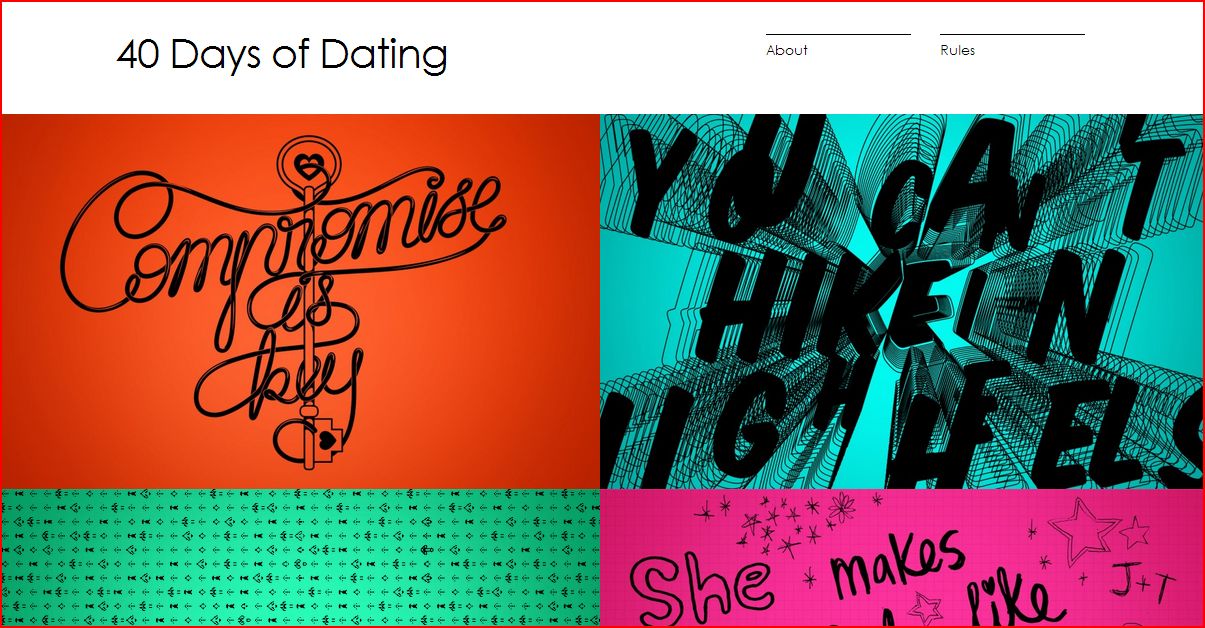
40 Days of Dating is my new blog obsession. Get hooked.

If you haven’t caught whiff of 40 Days of Dating, then you’re probably living under a rock. It’s more addictive than Pringles. This is largely thanks to well-stylized type treatments, a highly readable format, and its extreme relatability — we’ve all been there, we’ve all had that friend we sometimes wonder if we should be dating.

A quick summary for those of you living under a rock: two designer friends, Jess and Tim, decide that their romantic lives have been an utter failure. They embark on an experiment. They’ll see each other every day for 40 days, as if they’re in a relationship, and see what happens. They keep a kind of diary. That diary gets shared with us.

What become apparent quickly to readers is that despite their compatibility as friends, and their genuine affection for each other, is that they really are like oil and water when it comes to love. Being in a relationship is hard. The things you can ignore when you’re just friends become deal breakers when you’re lovers. In short, at about the mid way point Tim decides that being in a relationship is killing their relationship.

Considering the Platonic “Problem”

For anyone that’s had a friend of the opposite sex (or same sex — yay death to DOMA!) this is what we fear most — taking a great friendship and killing it in the name of happily ever after.

Where's Bacchus when you need him?
Where’s Bacchus when you need him?

The stakes are higher when you get involved with friends… but of course, when the stakes are higher, so is the potential payback.

Shortly after discovering 40 Days, I picked up my copy of Plato’s Symposium — the slim book that’s supposed to define a Platonic relationship — wondering if I could find anything in it that applied to Jess and Tim.

“‘Love’ is the name for our pursuit of wholeness, for our desire to be complete.” 

This is from a speech by Aristophanes, and if you read the speech in his entirety, that sense of wholeness comes from a relationship that transcends physical intimacy. The bond is greater.

The Mirror Has Two Faces

“You know what we need to do? Go back to my place and watch that scene in When Harry Met Sally. The one where he explains to her that men and women CAN’T be friends because of the sex problem. We’ll get a pint of Ben & Jerry’s.”

When you're talking about Plato, some how, Greek froyo seems the best side dish
When you’re talking about Plato, some how, Greek froyo seems the best side dish

Nothing beats best girlfriends. After they ask the tough questions you need to be asked, they always find a way to keep you smiling.

Pause. Rewind.

I had been talking about 40 Days of Dating with my favorite girl over meze and wine when she flipped Jess and Tim’s situation back on me.

“I just don’t get you two,” she had said earlier that night, part way into our bottle of wine. “You go out on dates, but you’re not dating. You wonder why you’re both single, and it’s never occurred to you that it might be because you’re not dating each other. Which one of you is scared to like the other?”

As someone whose relationship history is made up mostly of Platonic relationships, which always seem to inspire confusion, I was armed for this.

“The stuff he and I do together isn’t any different than what you and I do together. The only reason you think it’s a date when I see him is because he’s attractive. We work because there’s no pressure and no expectations.”

“That makes sense. I just don’t want you waking up one morning wanting more than he does. I don’t want you getting hurt… but I think he’s missing out.”

She might be on to something — one of us might get hurt and maybe he is missing out. But if he’s missing out, then so am I. I guess that’s why I applaud Jess and Tim for having the balls to make the leap to see if their friendship will lead to that wholeness. They’re braver than the rest of us. My fingers are crossed for them.

He Loves Me, He Loves Me Not: Considering a Romantic’s Romantic Past

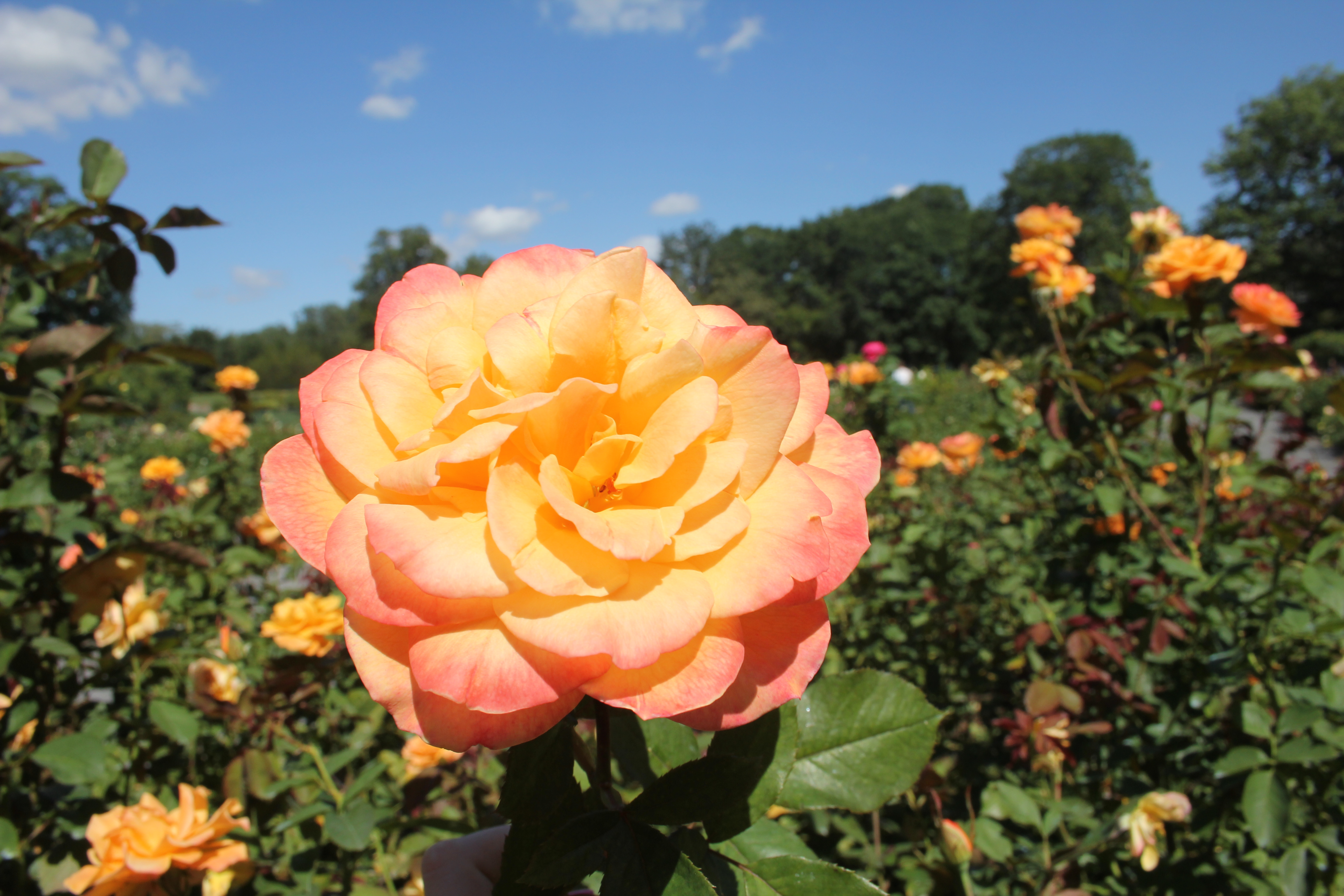
All it takes is a rose to answer the question: does he like me? It's more complicated than that...
All it takes is a rose to answer the question: does he like me? It’s more complicated than that…

Oh! How many flowers have lost their rosy petals in an attempt to answer a simple question: am I the apple of his eye?

He loves me.

(petal down)

He loves me not.

(another petal down)

You can learn a lot of things from the flowers, Alice taught us when she fell down the rabbit hole. So surely if the falling petals tell you so, he must love you.

Not so fast…

I used to cheat. My flowers always told me exactly what I wanted them to. Somehow, whether I’d count the decapitated stem or count the petals ahead so I could “accidentally” pull off two petals at once, I’d always land on “he loves me.”

Of course, he rarely did. But when you’re young and your eyes are blinded by infatuation, you’re always optimistic.

Staying an optimist when you’re older: Or, enter “It’s complicated”

As I was deadheading my rosebushes this afternoon, I flashbacked to playground crushes and flowers as  Magic 8 Balls shedding light onto my romantic fate. It occurred to me that whenever I respond with an “it’s complicated” to an  inquiry into my relationship status, I was employing the grown-up equivalent of cheating at the “he loves me/he loves me not” game.

Let me explain: saying “it’s complicated” is giving yourself a sense of hope that eventually it’ll all work out. “It’s complicated” is the optimist’s definition of an enigmatic, most likely dead-end relationship.

This realization occurred to me when “the one that got away” magically resurfaced after years of silence. For the first time since he was in my life, I was finally able to evaluate what we were without a biased heart.

For a long time, I defined our relationship to outsiders and even our friends as “complicated.” When I say complicated, what I really mean is that we were close friends, I liked him and wanted more from our relationship. We never talked about our fate or our feelings, in fact we avoided talking about those things even though everyone around us tried to instigate a happily ever after. For months, nay, years I believed we were teeter-tottering on the edge of “something.”

In my mind I had attached an “it’s complicated” status to us because it kept the possibility of an Us open. We weren’t complicated. We wanted different things. And while I waited for him to get on the same page (because, of course that was going to happen), I missed out on a few good, uncomplicated men.

Here is a basic truth: Relationships can be complicated, but feelings are not.

I’ll probably never really stop being an optimist when it comes to love — I’ll never stop cheating at the “he loves me/he loves me not” game. But hanging around in an “it’s complicated?” I think I’ve finally learned to keep it simple.

Yup, that's me.
Yup, that’s me.

Yes, We can Play that Game, Too: Considering “Sex on Campus” and the “Plight” of the 20-Something Female

It’s all on us, isn’t it? The “us” being women under 35 and “it” being the fate of romantic relationships, and therefore, the modern family.

I'm so over it.
I’m so over it.

If you’re been keeping track of the New York Time’s Sunday Style section and the Atlantic Monthly of late, you’ve probably noticed a slew of pieces examining the current state of the dating world. The choices and mindsets of single women seem to garner the most attention. The verdict, it would appear, is that we’re the ones directing the dynamics of contemporary relationships based on how we decide to answer a handful of questions:

Do we engage in casual, no strings attached sex?

Do we purely practice monogamy?

Do we wed early?

Do we focus on careers first, family later?

Do we try to “have it all?”

Frankly, I’ve had enough… Leave me alone. The kids are alright, I tell you.

In this past Sunday’s NYTimes, in a piece entitled “She Can Play That Game Too,” writer Kate Taylor reported on the sex lives of college-aged woman enrolled in UPenn. Taylor seemed to give a fairly straight forward account of the mindset of the Ivy Leaguers who applied cost-benefit analysis to their romantic encounters and generally considered college a stepping-stone and vital life-directing period of resume-building. Surviving those 4 years with honors under their belts didn’t exclude also earning notches on their bedposts, but made seeking serious romantic relationships a low priority on the totem pole.

I flashed back to my own Ivy League college days.

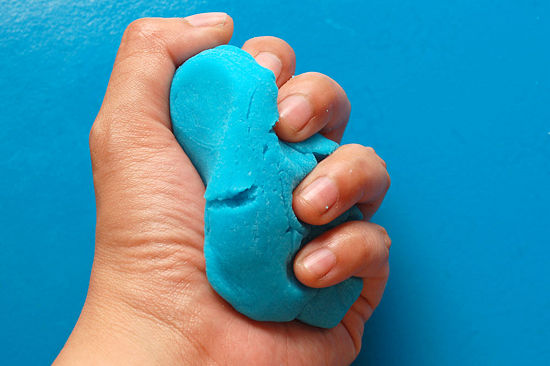
My future was mine to mold... or make a total mess of
My future was mine to mold… or make a total mess of

I was an economics major — you bet I applied cost-benefit analysis to dating (and well, to everything else… and everything, including men, got rated in terms of its “utility.”) But more significantly, like the women Taylor interviewed, I realized the stakes were high. I had a very unique opportunity. I was a Division 1 college athlete and in 4 years, I would have a degree from one of the most lauded universities in the world. The molding clay that was future had been handed to me on a silver platter and I had all the power in the universe to turn it into a masterpiece.

I could also make a total muck of it.

And let me tell you, making a muck of it was far easier.

I’ll always remember that night during my final week as an undergraduate when one of my best male friends took my hand and said to me: “I’m so proud of you and happy for you for everything you’ve accomplished. But our relationship could have been very different if you’d been around more.”

Your first question is probably: Do I have any regrets?

My answer: Absolutely not.

I’m 19. I’ve Never Had a Job. Oh, But I’m Supposed to Know What I want in a Husband?

What irked me the most about this article was the seeming pressure it put on women to make-up their minds in their early 20s, or hell, even late teens about how their life was going to unfold.

And Susan Patton wonders why young women are cautious about getting married and pregnant young

Susan Patton, who was widely quoted as the “anti-feminist” in the article was disappointed when she asked a class of Princeton undergraduate females if they wanted kids and a family and met hesitation.

Susan Patton is absurd.

Today’s young women are the witnesses of an increasing divorce rate and pre-nups, and the beneficiaries of new job sectors. This is not the generation of my mother, who was married at 18, went through college a wife and left her country and family to follow her husband’s career.

Are you surprised a teenager or 20-something would proceed with caution when it comes to committed relationships?

What I learned in college, burning the midnight oil on papers, clocking my hours at practice, writing for the college newspaper, and making friends more important than lovers, was who I was and what was genuinely important to me.

At 21, no boyfriend was going to figure that out for me.

I wish I could say I went to Columbia to find a rich husband — of course if I did, my 6 years on campus would have been a complete and utter failure. But I went there to find me, Kathleen.

So, mission accomplished.

How do you like them apples, Susan Patton?

Enter: The Bravo Generation. A scene to Consider for for New Grads

“I stand behind my vision. It represents me as an artist.”

I looked at the aluminium foil-clad box she just “installed” opposite the isolated robbed-from-the-web,  float-framed photograph then back at her and then back at the “installation.” I’m all for minimalism, but if this represented her vision as an artist, her pending MFA was going to have a short life span on the art market.

I felt like Michael Kors and this artist was about to throw someone under the bus to stand behind her artistic vision.

Frankly, her fate as an artist didn’t concern me. The feedback from me and our curator that this (shoddily-thrown-together-sorry-excuse-for-a-commissioned) artwork was entirely different from her accepted proposal, and therefore, entirely unprofessional fell on deaf ears.

I wanted to shake her — don’t you get it? We’re trying to help your career!

That’s what I hoped my eyes said to her when she added:

“I don’t think this is at all different from my proposal.”

Feeling a bit like Michael Kors on Project Runway, facing a designer blind to her own inexperience, I simultaneously admired her self-confidence and abhorred her arrogance. I vowed this was the last time I’d work with an MFA student. Emerging artist? No, thanks. Give me an established artist, I said to myself.

Ironic, considering that not so long ago, I was a soon-to-be recent grad school graduate waiting for my first break into the real world…

Maybe, I’m being harsh. But my experience with the Bravo-Reality-show-educated artist hasn’t been an anomaly when dealing with recent (as in, since 2011) graduates…

Enter the Bravo Generation, where an individual’s vision reigns supreme and constructive criticism from seasoned vets is really not constructive, it’s a complete lack of understanding.

Coming Soon? What? Your web-based business? Or adulthood?

I wasn’t entirely sure that recent things I read, including an A.O. Scott film review, were being entirely fair when they call the early to mid 20-somethings complacent, or stunned in their growth to adulthood. What I’ve noticed is an attitude — a kind of supped-up sense of entitlement (I have a right to be who I want to be and wait, as long as it takes, for the exact job that will put me on the path to be who I want to be) — and the false senses that an internship = experience and that starting a website and calling yourself a “founder” legitimizes you.

Sure, it’s the age of Entrepreneurship, but “coming soon” can only go on for so long.

So graduates, here are 3 things to keep in mind as you head out into the real world:

1. Know what you don’t know: Internships are only introductions — they don’t make you experts. Learn to acknowledge the difference between exposure and experience — Earning a 2-year MA in museum studies is not the same thing as working in a museum for 2 years. Courses for a grade are not the same things as projects for your boss.

2. Be prepared to earn your stripes. No one owes you anything and you’re not proven until you’ve been tested.

3. There’s always someone better than you out there. Let that keep you motivated, but also keep you humble.