
When Vanity Bites Back, or Life with Invisialign

My OKCupid user name back in the day was SheLIkesToSmile. Now, I can do that with straighter teeth... and by now, I mean a year from now.
My OKCupid user name back in the day was SheLIkesToSmile. Now, I can do that with straighter teeth… and by now, I mean a year from now.

I have this one tooth. It’s the lateral incisor on my right. It sits back behind my canine and my central incisor — a punishment for abandoning my retainer too soon. In the wrong light, I can look like a hockey player who lost a fight with a puck to my mouth. In the best light, I look like the kid whose teeth just grew in and whose parents still haven’t booked her appointment with the orthodontist.

I see it in every photo and every time I go to smile, I’m aware of it. But the tooth that make me look like a kindergartner doesn’t stop me from smiling. Life’s too short not to smile… but it does mean that I usually fight to stand on the left of any portrait (a fight I always inevitably loose.)

In the summer of 2012, an upper wisdom tooth abscessed, and before I could say “ouch” I was under anesthesia and undergoing a double tooth extraction. I woke up in a dentist office overlooking Central Park and stumbled a few blocks south east to the Brasserie, where I complimented some mild pain killers with a martini before passing out again at home. I was lucky — my face was barely puffy and when I went out the next day to celebrate the return of a few friends from the London Olympics, no one could tell I had just survived an oral surgery that seems to knock people off their feet for days.

Sometimes, with the wrong angle, I can look like this….

The trouble came a year later when my teeth started to shift again. Jaw and tooth pain compounded with my misplaced incisor inspired me to look into the full orthodontic works. I could handle braces again, I thought. I mean, I already look like I’m 16, why not? It might be nice to be carded more often again.

When it turned out I was a candidate for invisialign, I was pretty stoked. I could handle having braces in my social life, but being ol’ metal mouth again in a professional one was less appealing. It was even better when my quote for the treatment came in under my no-go threshold.

So on December 28th, my dentist attached some pretty sexy anchors to my teeth and sent me home with my first trial.

It was like wearing a mouth guard. Within the first hour, I was kicking myself. My lower jaw was jutting out, I couldn’t figure out how to keep my mouth closed, and saliva was pouring down my chin in the most unattractive way. I lisped and talking for more than 30 seconds was exhausting. Was this sheer act of vanity destined to be my downfall? That $7,000 could have been put to good use elsewhere… like on clothes. Would lipo have been less expensive?

“There goes your sex life,” my mother said as she passed me a tissue.

It was family movie night, and as we sat in the theater watching the coming attractions, a large drop of drool fell out of the corner of my mouth and onto my shirt.

It was something I hadn’t considered. Between tooth brushes and birth control, there were already enough accessories to pack on an adult sleep over, adding an invisalign kit into the mix definitely exed the possibilities of a casual overnight. Plus, “honey, just excuse me while I put my teeth back in,” is not the sexiest phrase for the under octogenarian set.

Being ready for anything just got complicated.

My new life as a single girl with dental appliances was put to the test faster than I expected. In another display of my talent for Bad Timing, I had scheduled a first date with a dreamy commercial pilot turned lawyer within the first 24 hours of beginning invisialign.

For the most part, it all went off without a hitch, largely because I left the device at home. However, my teeth hurt so much I couldn’t chew anything more solid than mashed potatoes and everything we ordered seemed to be made of bricks. As our date moved into its 6 hour (and my third, maybe fourth? drink) I started getting anxious — I had passed my 4 hour invisialign-free limit. And I was hungry. Like, really hungry.

Our good night kiss was brief. Like Cinderella I had to get home before the clock struck “too late!” and my tooth shifted back into its crocked place. Orthodontics are at least as expensive and irreplaceable as glass slippers…

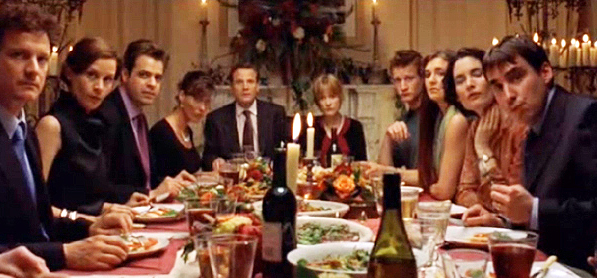
The Dragon at the Table

It’s official. I am Bridget Jones. (without Mark Darcy or Daniel Cleaver)

It was a quiet Saturday night, I had just spent the day with nearly 200 high school students at a multi-school fencing meet and my body ached with the kind of fatigue that can only comes from being the surrogate sport parent (err… coach) to some 40 kids. All I wanted was a gin and tonic, some Chicken Tikka Masala — because, you know, I’m a child of the Commonwealth, and that’s our version of comfort food — and a mindless Rom-Com.

I was in luck. I had timed my take-out TV dinner and booze just right so I could catch the last half-an-hour of “Bridget Jones’s Diary.”

Mark Bloody Darcy.

Swoooooon.

I was 13 when I first read Helen Fielding’s cheery, timeless adaptation of Pride and Prejudice. In the back of my mind, I knew I was at least a tad more Bridget Jones than Lizzy Bennett, but I was too young to really relate to all the emotional ups and downs Bridget traveled along as she tried to make her way through work, family, and love.

Enter age 29. 

You know your 20s are basically over when 22-24 year-olds attempt to pick you up with the following lines:

– How do you feel about being hit on by a younger man?

– While you’re searching for Mr. Right, how about having some fun with a younger guy?

– I know I’m probably too young for you, but can I buy you that next drink?

I’ve officially moved out of the age bracket that qualifies me as the “young play thing” — the desirable, elusive object of affection from professional men in their 30s to mid-40s. This is not inherently a problem. I am on the verge of entering their age bracket, which makes me more of a peer and less of a fresh-off-the-collegiate-boat co-ed. I am no longer doe-eyed and naive. I am savvy. I know better.

You can’t pull a blindfold over my eyes… well you can, but you have to ask nicely. 

Readying myself to move on to a new decade doesn’t really require much prep-work, but I admit that there are a few things I need to acknowledge now that I could previously ignore — both realities and absurdities of life.

family-party-bridget-jonesI’ve reached an age where most of my friends are comfortably domesticated — if they’re not married and making plans for baby, they’re in the kind of relationships that seem destined for the altar. As you move further away from college, you move further away from the all-nighter, 4 parties a week (a night?) lifestyle. You lose one kind of social endurance and replace it with another. 10 PM seems a perfect bedtime and laundry is a perfectly acceptable weekend activity. You haven’t grown boring. You’ve grown more selective. Your friends grow more selective too, and as more of them find themselves in couples, your find your social life naturally changing.

The challenge with being the last single girl at the party is that everyone finds a way to let you know you’re the last single girl at the party.

Cut back to Bridget Jones. 

“Wednesday 1 February
11:45PM … “Yes, why aren’t you married yet, Bridget?” sneered Woney (babytalk for Fiona, married to Jeremy’s friend Coasmo) with a think veneer of concern whilst stroking her pregnant stomach.

Because I don’t want to end up like you, you fat, boring, Sloaney milch cow was what I should have said, or … Because actually, Woney, underneath my clothes, my entire body is covered in scales.”

Bridget asks her reader, why? Why is it that married/coupled-off people feel the need to corner us single folk about our love lives?

“Tell me all about your men and dating adventures! I feel like you have a new boy toy every time we meet!”

“Thank god I’m done with all that dating stuff I mean, how DO you DO IT? I mean, how DO you meet people!?”

“We have to find you someone. You’re so great! I’d set you up with one of Bob/Phil/Rich/insert-generic-male-name-here’s friends… but they’re all married too!”

“Mary/John is away Friday, so I’m free. Entertain me! Let’s go out like we used to… I’ll be your wingperson!”

Sigh.

“Maybe Smug Marrieds only mix with other Smug Marrieds and don’t know how to relate to individuals anymore. Maybe they really do want to patronize us and make us feel like failed human beings. Or maybe they are in such a sexual rut they’re thinking: “There’s a whole other world out there,” and hoping for vicarious thrills by getting us to tell them the roller-coaster details of our sex lives”

The truth is, us single girls approaching and in our 30s are the dragons at the dinner table — beautiful to look at, exotic, but no one’s sure when we’ll start spitting fire. We aren’t covered in green scales. But as we’ve watched our friends move on into happiness, and as we’ve trained ourselves to answer the inevitable “is there someone special?” we have had to develop a pretty thick skin.

The Problem with the Girl with the Mattress: Considering Emma Sulkowicz, Performance Art, and Gender-Based Misconduct

Emma Sulkowicz is one of the most interesting and problematic figures in the art world right now, though no one is really talking about her as an artist.

She’s a victim. She’s an attention seeker. She’s a martyr in short-shorts carrying a mattress. She’s the voice of the voiceless. She’s a privileged Ivy League art student with a gimmick for her senior project. She’s a symbol of a failed justice system. She’s the civilian at the State of the Union.

Of course, all of these statements are reductive, and as such, none are the whole truth or whole fallacy of Emma Sulkowicz.

Carolee Schneemann's "Interior Scroll" was an important work of feminist Performance Art
Carolee Schneemann’s “Interior Scroll” was an important work of feminist Performance Art

From the beginning of her “Mattress Performance: Carry that Weight,” I’ve been uncomfortable with Ms. Sulkowicz. As an art historian (and fellow Columbia fencer — Roar, Lion, Roar) my first reaction was not to her story, but to the art work. “Carry that Weight” felt like a student art project: derivative and unoriginal. Performance Art is dead these days, thanks in large part to Performa and the medium’s increasing theatricalization (I just made a word there). “Carry That Weight” is not Orlan carving up her face, adding absurd implants to question definitions of beauty. Nor is it Carolee Schneemann’s “Internal Scroll.” It can be argued (as her adviser tried to do) that it’s an act of endurance art a la Marina Ambromovich, but the direct comparison doesn’t help it feel original.

The other problem is that in order for the piece to have any significance to the viewer, it needs the context of Emma’s biography. Having a broader sense of current affairs doesn’t really help. A student carrying a mattress is meaningless and non-specific.  Maybe the piece is about immigrants, or the homeless in New York — a city of great economic disparity. Emma’s name suggests non-North American roots, while her own ethnicity is visually ambiguous. There is no auxiliary iconography to provide clues that will help us decipher the performance.

See what I’m getting at…

The piece needs the media to make it successful. And that should raise some alarms.

And what about Ms. Sulkowicz’s story? What was my reaction there? I was disturbed on many levels. First, I was appalled at the statistics her performance brought to light. Next, I was disturbed by how I reacted to her interviews.

“If she wants to be taken seriously, she shouldn’t be wearing short shorts and a tank top. The dye-dipped hair doesn’t help either,” I remember saying.

By seriously, I meant seriously as a professional artist, but what I was also implying, was seriously as a victim. It’s too easy for men as well as woman to look at someone in revealing clothes or with subculture accessories and make snap judgments about everything form their trustworthiness to their sexual preferences. But why is this the case? Appearances are not facts. Shouldn’t a girl be able to go out in a mini-skirt or low cut top and feel safe? Is she “asking for it?” No, she’s not.

This week, her alleged rapist was finally granted a venue to share his side of the story in the media. This was long overdue. The media’s eagerness to turn Emma into a symbol should raise some cautionary flags, largely because the writings have been one-sided.

On the other hand, what the campus rape revelations, the police brutality incidences, and the related media responses have proved is that we live under local justice systems that are inherently flawed — that tend to favor the accused perpetrator rather than the potential victim. Paul Nungesser has a right to share his story as publicly as Emma. The differing accounts are troubling, and a reminder that there is no absolute truth. The timeline of Emma’s interactions with Paul post-incident doesn’t mean she didn’t feel violated or that there wasn’t an incident of assault.

I just hope that the Daily Beast piece doesn’t become a rallying cry for those who want to go on pretending that victims of gender-based assault are just crying wolf.

I always remember my academic adviser warning me off writing a thesis because it was a waste of my final semester in college. “No one writes anything very important for an undergraduate thesis. There isn’t enough time. You’d be better taking another class.”

Is Sulkowicz’s performance piece an exception to that rule?

As a piece of performance art, the answer is no. But as an act of protest, or act to raise social consciousness about a flawed system, the answer is yes — it’s extremely important.